
Driving With Neuropathy: The Conversation Nobody Starts
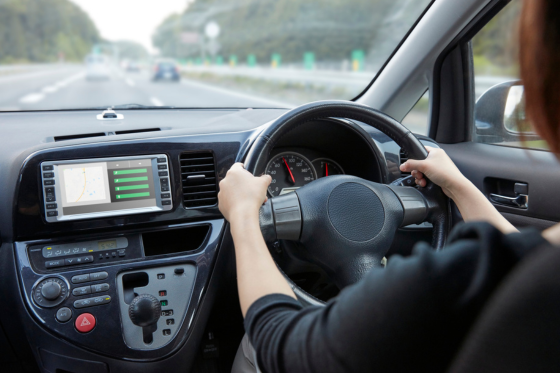
There is a question people with neuropathy think about privately and rarely raise.
Should I still be driving?
They do not ask, because they are afraid of the answer. And clinicians frequently do not ask either, because it is an uncomfortable topic and because nobody is quite sure whose job it is.
So it goes undiscussed, which serves nobody.
Here is what the research actually shows, what can be done about it, and why the answer is considerably less binary than people fear.
What the Research Found
Driving performance in people with diabetic peripheral neuropathy has been examined using driving simulators, and the findings are specific.
Slowed brake reaction time has been demonstrated in drivers with lower extremity neuropathy.
Difficulty shifting the foot between the brake pedal and the accelerator.
And a study examining accelerator pedal control found that participants with diabetic peripheral neuropathy had weaker maximal plantar flexor muscle strength and reduced ankle proprioception, which contributed to more driver errors compared with people without diabetes.
The authors noted that control of the accelerator pedal and overall driving performance are affected, while adding that the research opens up opportunities for technological solutions and training programs to help people drive more safely.
It is worth noting that the literature in this area is limited, and most of it examines diabetic neuropathy specifically. The mechanisms, though, apply to reduced foot sensation and ankle control generally.
Why This Happens
Three things combine, and none of them are about vision or cognition.
Reduced sensation. Your foot is reporting less information about where the pedal is and how hard you are pressing.
Reduced proprioception at the ankle. Research has specifically identified increased ankle repositioning error, meaning the foot is less accurate at finding and returning to a position.
And reduced strength. The study above found weaker plantar flexor strength, which affects how quickly and forcefully you can apply a pedal.
Together those produce the specific problems reported: slower braking, less precise accelerator control, and difficulty moving quickly between pedals.
Which is a mechanical and sensory issue rather than a general fitness to drive issue, and that distinction matters because mechanical and sensory issues frequently have solutions.
The Finding That Changes the Tone
Here is the part worth holding onto.
In the simulator research, driving performance improved with practice.
Time spent in loss of control events was substantially reduced on a second drive, which suggests this is partly a skill that can be trained rather than purely a fixed deficit.
Which is consistent with the general picture. Balance, strength and coordination all respond to training, and there is no reason pedal control would be exempt.
Signs Worth Taking Seriously
Some specific things that indicate this is worth addressing now.
Your foot slipping off a pedal, or needing to look down to locate one.
Difficulty moving quickly between accelerator and brake.
Uncertainty about how hard you are pressing.
Cramping or fatigue in the leg or foot during longer drives.
Needing to use your left foot for the brake when you did not previously.
Any near miss involving delayed braking.
And the one people report most reluctantly: a passenger commenting on your braking or pedal use.
If any of those apply, that is information rather than a verdict.
What Can Actually Be Done
This is the part people do not know exists, and it changes the conversation from whether to how.
A Driver Rehabilitation Specialist
These are professionals who assess driving ability in the context of a medical condition and recommend solutions.
A certified driver rehabilitation specialist can carry out a comprehensive driving evaluation, including assessment of brake reaction time, and can recommend adaptive equipment where appropriate.
They can also assist with vehicle choice, which matters more than people realize.
Crucially, their role is to keep people driving safely where that is possible, not simply to take licenses away. The evaluation is an assessment of ability and of what adaptations would help.
This is the referral almost nobody is offered, and it is the single most useful step available if driving is a concern.
Adaptive Equipment
Depending on the evaluation, options may include hand controls, pedal modifications, or other adaptations.
Hand controls in particular are a well established solution for people whose feet cannot reliably operate pedals, and many people use them without any wider loss of independence.
Vehicle Choice
Automatic transmission, which removes the clutch from the equation.
Pedal positioning and spacing, which vary considerably between vehicles.
Seat position and height, which affect the angle your ankle has to work at.
And a vehicle that fits you, which a specialist can advise on before you buy rather than after.
Training and Conditioning
Given the mechanisms involved:
Ankle strength and control work, since plantar flexor weakness and ankle proprioception deficits are specifically implicated.
Balance training, which improves the broader sensory motor picture.
And deliberate practice, given the improvement demonstrated with repeated exposure in the simulator research.
Practical Adjustments
Alongside formal assessment, some things worth doing.
Choose footwear deliberately. Thin soled, well fitting shoes with a secure fastening transmit more usable information than thick soled or loose footwear. Never drive in flip flops or slip ons that can come off.
Check the seat position so your ankle is at a comfortable angle and you are not reaching.
Avoid long drives without breaks, since fatigue worsens all of the above.
Be cautious at night and in poor conditions, since vision compensates substantially for reduced sensation and conditions that reduce visual information stack the problems.
And plan around your symptoms. If there is a time of day when things are worse, that is worth factoring into when you drive.
The Legal and Practical Side
Requirements for reporting medical conditions to licensing authorities vary by state, and insurance considerations vary too.
This is worth checking rather than assuming, and your physician can advise on what applies in your situation.
Addressing this openly is generally better than not, including practically. A documented assessment showing you are safe to drive, with or without adaptations, is a considerably stronger position than an undiscussed concern.
Having the Conversation
If a family member is worried about you, or you are worried about a family member, a few things make it go better.
Frame it as an assessment rather than a verdict. A driver rehabilitation evaluation determines ability and identifies solutions. That is a very different proposition from being told to stop.
Focus on the specific. Pedal control and braking are concrete and assessable, unlike a general conversation about whether somebody is safe.
And lead with what is at stake on the other side. Independence, work, family, and not becoming reliant on others are all reasons to address this properly rather than avoid it.
Seek Medical Attention For
Rapidly worsening numbness or weakness.
New weakness in a leg or foot, or a foot that catches when you walk.
Any fall.
Dizziness or lightheadedness, particularly on standing, which has its own implications for driving.
Any new wound or ulcer on a foot with reduced sensation.
And emergency care for sudden numbness or weakness on one side of the body, especially with facial drooping, arm weakness or difficulty speaking.
Let Us Address the Underlying Capability
Pedal control depends on ankle strength, ankle proprioception and reaction speed. All three are measurable, and all three respond to training.
Power Physical Therapy offers a free discovery visit at no cost and no obligation. You will get a thorough assessment of your ankle strength, balance, sensation and lower limb control, a clear picture of where you stand, and a program targeting the specific capacities that driving depends on.
If a formal driving evaluation is the right next step, we will tell you plainly and help you find one.
