
Your Knee Replacement Is Scheduled. What Should You Do Until Then?
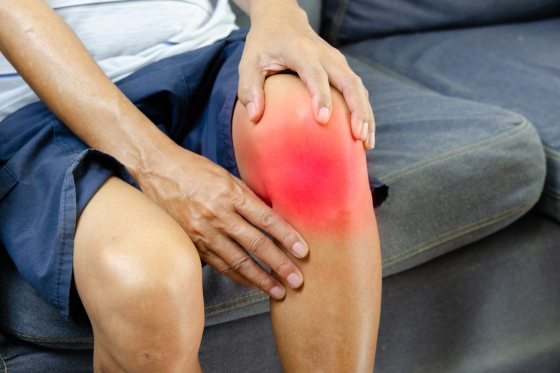
You have the date. It might be six weeks away, it might be six months.
And the default is to wait.
Most people spend that period doing less, partly because the knee hurts and partly because there seems to be no reason to do otherwise. The surgery is the thing that is going to fix it.
That is a missed opportunity, though for reasons that are more nuanced than the usual prehab marketing suggests.
Here is the honest picture.
The Problem Worth Knowing About
Up to 30 percent of patients with osteoarthritis experience suboptimal recovery after total knee replacement.
That is a substantial minority, and it is the reason there has been so much interest in whether anything done beforehand changes the outcome.
Which is a fair question, and the research gives a genuinely mixed answer.
What the Evidence Actually Shows
We would rather give you the accurate version than the promotional one, so here it is in both directions.
The less encouraging findings:
A network meta-analysis examining prehabilitation before knee replacement found that at three months after surgery, no prehabilitation modality demonstrated statistically significant improvements in physical function, quadriceps strength, pain or quality of life compared with standard care. Lower extremity strength training did improve short term quadriceps strength, though that finding rested on low confidence evidence.
A separate systematic review and meta-analysis found that prehabilitative resistance training offered no additional gains in isometric quadriceps strength at six and twelve weeks after surgery, and highlighted a scarcity of robust dose response evidence to guide how prehabilitation should be designed.
The more encouraging findings:
A comprehensive systematic review with meta-analyses found that in patients undergoing knee replacement, significant improvements were observed in function, quadriceps strength and length of hospital stay, with overall effect sizes described as small to moderate.
And one analysis found a small effect on strength beyond twelve weeks, even where no effect was seen in the early post-operative period.
The clearest finding of all concerns the period before surgery. A meta-analysis examining preoperative strength training found that immediately before surgery, the strength training group showed significant improvements in pain, knee function, functional ability, stiffness and physical function compared with controls.
How to Read All That
Prehabilitation reliably improves how you feel and function while you are waiting. That finding is consistent and it is not trivial, particularly if you are waiting several months.
Whether it meaningfully changes your outcome after surgery is less certain. Some analyses find benefits in function, quadriceps strength and length of stay. Others find nothing at three months. The evidence is genuinely mixed and the effect sizes, where present, are small to moderate.
Anybody telling you prehabilitation will transform your recovery is overstating it.
And anybody telling you it is pointless is ignoring the demonstrated benefits before surgery and the findings on function and length of stay.
A reasonable position: the waiting period is otherwise dead time, the downside is minimal, the benefit while waiting is well supported, and there may be a modest benefit afterward.
What Is Worth Doing
Given all of that, here is where to put the effort.
Strength, Especially the Other Leg
Your operated leg is limited by pain, which caps what you can do with it.
Your other leg is not, and it is the one that will carry you through the early recovery. Getting out of bed, standing from chairs, managing stairs and using a walker all depend heavily on the non surgical side.
It is also the leg most commonly ignored entirely, which is a straightforward oversight.
Work the operated leg to the extent pain allows, which is frequently more than people assume, particularly with isometric work and supported movements.
Upper Body
You will be pushing yourself up out of chairs and using a walker or crutches.
Both are upper body tasks, and arm and shoulder strength is rarely considered beforehand.
Seated pressing, rowing, and simply practicing pushing up from a chair using the arms all count.
Practice the Specific Movements
Sit to stand, from the height of chair you actually have at home.
Getting in and out of bed.
Stairs, one at a time, using a rail.
And getting on and off a toilet, which is a genuine practical concern afterward.
Cardiovascular Fitness
Whatever your knee tolerates. Stationary cycling, swimming, pool walking, or an arm ergometer if weight bearing is limited.
General conditioning affects recovery and it is frequently the first thing to go while waiting.
Set the House Up
Do this before surgery rather than in the week afterward.
Chair heights, bed height, the route to the bathroom, grab rails where needed, a raised toilet seat if rising is effortful, removing rugs and clearing the paths you will be walking.
And sort out what you will need upstairs versus downstairs, since stairs may be limited initially.
Understand What Is Coming
Ask your surgeon specific questions: what the expected timeline is, what restrictions apply, when you can drive, when you can return to specific activities, and what rehabilitation is planned afterward.
That last one matters enormously. A meaningful number of people complete the early recovery and receive no structured rehabilitation beyond that, which is where the strength deficits that cause long term dissatisfaction persist.
A Realistic Note on Expectations
Knee replacement is good at what it is designed for, which is reducing pain.
It does not automatically restore the strength, balance and confidence you lost over the years leading up to it. That part is rehabilitation, and it continues well past the point where walking becomes comfortable.
Which is another argument for starting before rather than after. You are not building toward the operation. You are building toward being able to do things afterward, and the operation is an event in the middle of that.
Contact Your Surgical Team For
Increasing pain rather than gradually improving pain after surgery.
Wound problems including redness, drainage or opening.
Fever or feeling generally unwell.
New or increasing swelling.
A knee that gives way.
Range of motion that is going backwards rather than forwards.
And seek urgent medical care for calf pain, swelling, warmth or redness, or any chest pain or breathlessness, which can indicate a blood clot and needs same day assessment.
Use the Time You Have
Whether your surgery is in six weeks or six months, that period is currently doing nothing for you, and it could be doing something.
Power Physical Therapy offers a free discovery visit at no cost and no obligation. You will get an assessment of your strength, movement and function, a realistic picture of where you are, and a program for the waiting period that addresses both legs, your upper body and the specific tasks you will need afterward.
We work alongside your surgical team, not instead of them.
